


In this episode, Marcus Smith speaks with Steven L. Peck, an author and BYU biology professor. Peck found his world overturned by a brain infection that caused severe hallucinations. Suddenly, he plunged from the rational world of academia into a terrifying realm of assassin-children, evil doctors, and river-rafting MRI machines. Emerging from that chaos, he decided to explore the wonders of the human mind, uncovering unexpected kindness along the way.
Guest
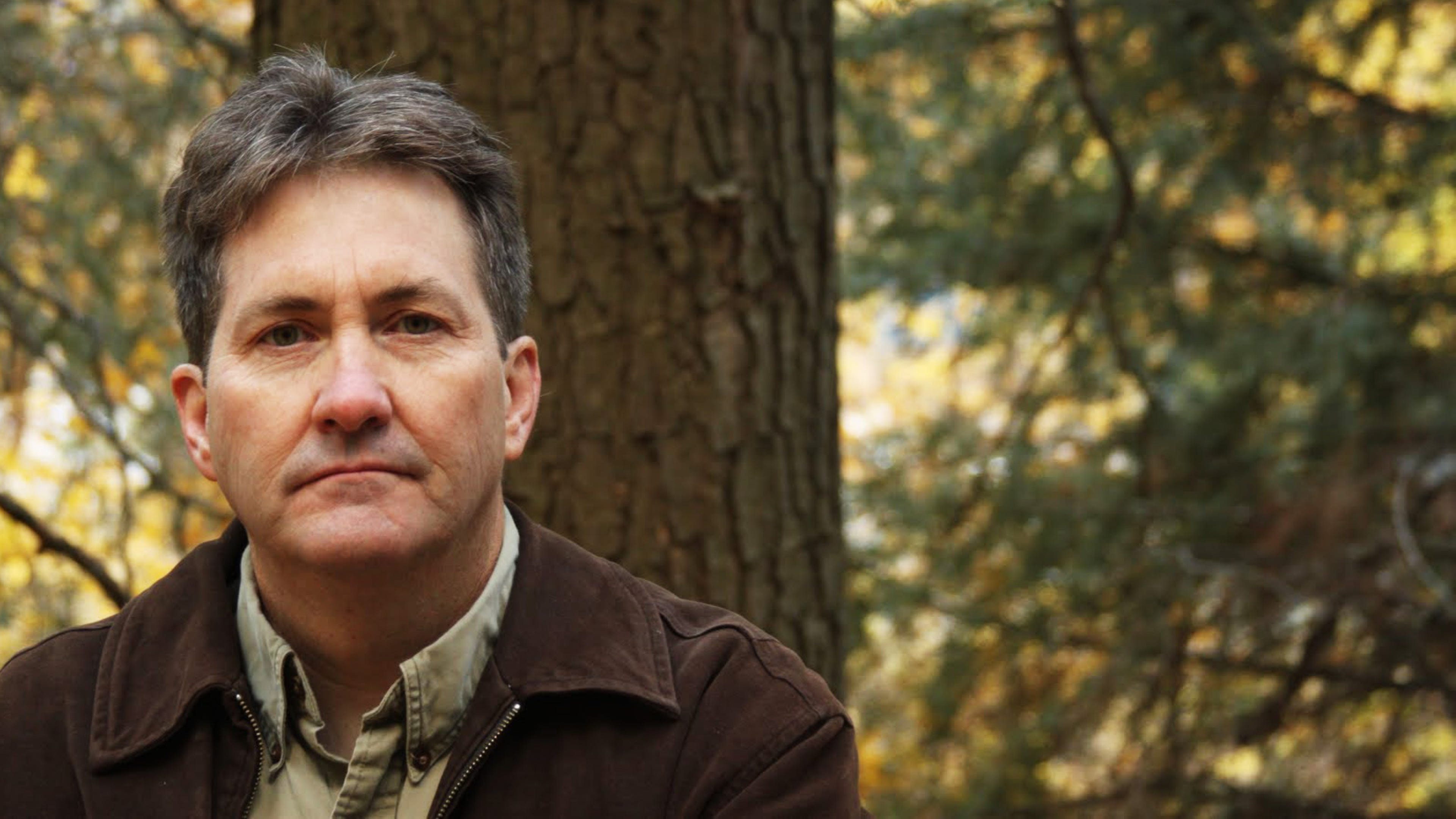
Steven Peck is an American evolutionary biologist, poet, and novelist. He is a professor of biology at Brigham Young University. Peck received his PhD from North Carolina State University in biomathematics and entomology. Peck’s fiction often defies genre conventions and discusses philosophical themes. Critics have praised his unusual stories for their emotional power and their analytical approach to Latter-Day Saint themes. His books The Scholar of Moab and Gilda Trillim received the Association for Mormon Letters (AML) award for best novel, and Peck received the Smith-Petit Lifetime Award from the AML in 2021.
Transcript
Marcus Smith: I am Marcus Smith, and this is Constant Wonder. Join me on a quest to find awe and wonder in all nature, human or wild, vast or small, encounters that move us beyond words.
Steven Peck: My kids were being trained as assassins. They had been cloned by this evil organization that was going to take over the world. My kids had been copied, but they didn’t know they were copies. They copied kids, believed they were my real kids. My kids had been copied, my kids had been copied, my kids had been copied…
Marcus Smith: In real life, this father of copied kids is an entomologist at Brigham Young University with a passion ranging from butterflies to tsetse flies. Steve Peck’s interests range even further. He’s passionate about theology and evolutionary ecology, about Japanese haiku, the soundscapes of nature. He’s an award-winning novelist and essayist, an avid birder, and an unusually adept practitioner of what this podcast advocates for with every episode: constant wonder.
Steve Peck models a thoughtful attentiveness. You can hear it in his voice. He’s calm and peaceful. It’s a personal demeanor, a consciousness that seems to shape his every interaction, human or environmental. And yet, once his very own children got cloned by an evil organization that was training them to be assassins … well, he honestly believed that once. For a short season, it made perfect sense to him.
In this episode, we’ll hear directly from Steve how he slipped into pathological delusion. He’ll tell us how and why he lost his mind, smack dab in the middle of his prime years of professional work as a scientist. And most importantly, I want you to get a sense for how the memory of this bizarre experience has given him a fresh new take on reality.
Even a heightened reverence for life. When I sat down to visit with him, I began by asking him to take us back to his early adulthood, to something that happened to him during a short stint working in the US military. This was many years before the brief but pivotal event in his life that he’s often described as his madness.
It’s an incident involving one human and one reptile, alone together in the desert west of Utah Lake.
Steven Peck: After I got out of the Army, I came to BYU to study biology, and I also joined the Army Reserves just as a source of income and something to do on the weekends, I suppose. And I was on field maneuvers, which were extremely boring, and we were told to go sit in the desert for a long time.
That’s what I was doing. I was standing there or mostly sitting, standing, walking, trying to kill some time and to enjoy myself. And I sat down. I remember the atmosphere. It was a spring day. It was beautiful. I grew up in Moab, so for me, nature’s always been a part of my life. And sitting there, I began to feel the feelings I used to feel when I was back in Moab, sitting among the red rocks.
And I sat down next to a scrub oak and a rock and the air was cool, it was beautiful, and I began to just enjoy myself sitting. While I was sitting there, a lizard popped its head above the rock and looked at me and I held really still. I watched it for a while and it made its way slowly out onto the rock and I moved a little bit and it didn’t run. It just stayed perfectly still and then it started exploring the rock a little more and I laid my hand down and it came up.
I don’t know … lizards aren’t known for their intense intelligence, but it walked towards me and then climbed on my hand and I let it come up my arm and I just sat there really pretty still and started watching it. It was doing kind of a little dance, a little bob with its feet, like somebody doing pushups.
It didn’t run away. It stayed with me. Maybe I was warm. There may be some scientific explanation for why it didn’t move, but it just sat there. I don’t know how to describe this very well, but I started to feel a connection with that lizard. I began to feel like this was something really important that was happening and it wasn’t so much that I articulated that thought, but I remember the feeling, a feeling that this lizard was somehow important and I was connecting with it, and pretty soon I felt like I knew it.
I felt like, Wait a second. This is the same thing I would feel with a friend I was getting to know, or somebody that mattered, that I wanted to stay connected with. And because it kept sitting there occasionally bobbing and occasionally looking around, but for the most part it was resting on my arm.
I just felt like I was a part of its world and it was a part of my world, and we had somehow connected in a big way.
Marcus Smith: People might think of this as being a little woo-woo, and yet we do it all the time with our household pets.
Steven Peck: Yes. And it is a little woo-woo, but in a really good sense, because I couldn’t have predicted this. There’s no way that I was trying to achieve this. ‘Here I am in the desert! Time to connect with a lizard.’
It was all circumstantial, accidental, contingent on lots of events that I couldn’t orchestrate if I tried. But it happened and I had a genuine experience of connection with that little creature. I think back on that, and I think back on my love of nature. My connection with nature has always been about these kinds of experiences. They’re chance encounters, but they have a depth.
I was trying to become a scientist and I probably had thoughts about, What kind of lizard is this? Why is it living here? What’s the ecology of its home? But that faded in importance as I sat with that lizard. And this unpredictable, unscientific, woo-woo event really moved me and changed me. This was decades ago, and yet, it’s still real to me.
Marcus Smith: Can you qualify for me what that change was? It is very common for people to just toss out that “I was changed,” but can you define the change?
Steven Peck: I think so. A little bit of it’s not … it doesn’t lend itself to language very easily. It’s one of those ineffable moments, I would say. I’ve looked for those encounters and I’ve noticed them more. I think the change was in recognizing the impossibility of having these kind of encounters in nature. I’d had a lot of encounters with nature before this, but this one was profound in a sense that it took a long time. I was sitting, it’s hard to sit with a lizard a long time, I’ll be honest.
I was sitting with that lizard a long time.
Marcus Smith: Are we talking fifteen minutes? Half an hour?
Steven Peck: So this is kind of a weird thing to say. I don’t know. Time kind of disappeared, but I think it was on the order of 45 minutes. It was a while. The change that occurred in me … I noticed at the time a sort of third-person objective saying, “Wow. I’m with a lizard and this is cool.”
I didn’t try to analyze it very much beyond that, but the changes were all about, I want to do this again. I want to have these kinds of encounters. I want to live in a world where I’m connecting with the parts of nature, the feelings that nature can bring.
It changed me by opening possibilities that I hadn’t been aware of before. I think about what that lizard meant to me, and I felt like I got to know it in a strange way, like we had had an encounter that was extremely meaningful.
Marcus Smith: To the lizard?
Steven Peck: Probably not to the lizard. I honestly think it was probably getting warm and my arm was warmer than the ambient temperature.
But I felt happy—and this is me being really anthropomorphic—but I felt happy that the lizard felt safe with me. I felt happy that it had decided to join me in my waiting. And it wasn’t afraid and it didn’t run away. It didn’t sense me as danger and that connection bound me to it. The lizard probably had no experience like that, but I did, and I’m not sure it didn’t, though.
Animals have experiences, I’m convinced of that. There’s a philosopher named Peter Godfrey Smith who writes about this. I can’t know what its experience was. But I like to think that it was somehow mutual in some sense, whether it was a perceived sense of safety or it was a chance for it to sit and get warm … whatever its experience was, I was glad I was there for it, and I was glad I had one too.
Marcus Smith: You’ve said that the lizard experience made you want to have many more encounters with nature like that, and since then you have had many more such personal moments of awe. In fact, as I understand it, just this year, you found something that really put a smile on your face and it was right in your own backyard.
You didn’t have to go very far at all.
Steven Peck: No. So I’d become interested in the sounds of the world. I’ve become really interested in birds and their music and its relationship to human music. I teach a class, in fact, on birds and music with a music professor, Steven Ricks. So I’d been thinking a lot about birds and I was trying to get to know them and I’d always have to go somewhere far away to look at birds through binoculars.
And I got really curious about where they went when it was raining or cold or at night. And I had no idea. I knew they probably found a safe place to sit to huddle together, to warm, to be a bird. But this curiosity grew and grew and I started to think, Well, how could I figure out what birds were doing at night? They’re invisible.
And I was thinking about maybe a night vision scope or something, and I thought, Well, I could see the heat signature of birds, and so I got one of those handheld devices that they use to look at energy efficiency in houses.
Marcus Smith: Did you just go down to the local hardware store to pick that up?
Steven Peck: Yeah. It had a little screen on it that would give the temperature and only the temperature, so I couldn’t look out a window with it. It would just show me the temperature of the window, so it doesn’t have that kind of visual abilities, but it does show heat. And so I started using it and I tried it out on my parakeets.
And they lit up. Birds are a little warmer than humans. Birds have a temperature just above ours, and the birds were bright and I thought, Oh my word. This is how I can figure out what they do at night.
Marcus Smith: You tried it out on more than just parakeets. Probably your wife or somebody …
Steven Peck: I did, I did. I looked at my foot and you know …
Marcus Smith: I know how that goes.
Steven Peck: Wow, my toes are cold! I was having fun with it too, but I took it out into my front yard. We have a big juniper tree and there was nothing visible at all. It was dark, it was night. There was no sound. The birds weren’t singing.
I aimed my contraption at the juniper tree and I could see the birds right here next to my house and I could see what they were doing. They were huddled near the trunk, several. And there were patches of these clusters all over the tree. And I was so surprised because I knew birds did something at night, but I didn’t know what.
But here they were, all lit up and visible to me in a place that they were never visible before. And I have to admit, that was so cool. For a long time, I’ve been an insect scientist, birds were new to me. But I hadn’t seen anybody talking about birds at night. There’s a lot of information about birds migrating at night, being picked up by radar, people trying to record the sounds of migrating birds peeping in the sky and things.
But I hadn’t seen anything working out where they go at night to rest or to sit or just to be birds. And here they were, in little clusters, all over my juniper tree. And that blew my mind.
Marcus Smith: You know, Steve, your personal fascination here, it really stems from the fact that the birds weren’t just in any old tree, but they were right next to your home.
And guess what? They’d been there for years and years and years. That’s the whole point, right?
Steven Peck: It was just an amazing event for me, right next to my house, in a tree that I knew like the back of my hand, and here was something I didn’t know about the birds. Since then, I’ve been able to discover doves in the apples out back and things like that.
But this initial discovery was really a moment of just complete coolness, like, Wow. There are birds sleeping in my juniper that I had no idea existed there.
Marcus Smith: Steve Peck is with us, a biologist at Brigham Young University. He’s also a thinker and a poet and a fledgling haiku artist. More on that aspect of his peaceful, intellectual, creative life later on. But one of Steve’s greatest claims to fame is almost certainly the thing that utterly and violently upended his life.
No one would ever want to go through what he experienced, but having come through it alive, he’s happy to tell people about it. And he’ll do precisely that with us in just a few moments. I’m Marcus Smith, and this is Constant Wonder.
Detecting birds taking cover in a juniper at night. Playing host with your forearm to a wild lizard for three quarters of an hour out in the desert.
These kinds of encounters are no doubt conducive to the emotions of awe and wonder. Time spent in the natural world can bring amazing, enthralling, some would even say magical experiences. I’m not sure that what comes next fits quite so obviously under the heading “magical.” It all began with searing head pain that, in Steve’s experience, was unprecedented.
Steven Peck: The headaches were horrific. I’d never experienced anything like it. I’ve had migraines before that were really bad, but these were unmanageable, so they decided to put me in the hospital. So I was in the hospital and I wasn’t doing well mentally, but I was so impressed with the care that I got.
What they did to make me more comfortable was, when I went in to get the MRI to see if they could see what was going on in my head, they hitched it to a pickup and they took it all the way up to the top of Provo Canyon and floated me down the Provo River in the MRI machine. If you can imagine, I was so impressed. I thought, This is patient care, and I had little windows in the MRI machine and I could see tubers going, by people riding …
Marcus Smith: Inner tubes?
Steven Peck: … inner tubes down the river, and there they were, just floating down the river.
And it was pleasant. And I was at ease because I knew that a place that cared enough to float an MRI machine down the Provo River was a stellar job.
Marcus Smith: What’s your excuse here, though, for working yourself into something that resembles a tall tale?
Steven Peck: I picked up a brain disease while I was doing research on butterflies in Tam Đảo National Park in Vietnam and it entered my eye, a bacteria, and it shot into my brain directly.
It didn’t go into my bloodstream, anywhere, anything like that. And it infected me. It’s a really bad bacteria too. It usually causes lung infections and things, but it can affect any organ. The technical name was Burkholderia pseudomallei.
Marcus Smith: As long as you’re throwing around those fancy terms for little things here, what kind of little things were you studying in Southeast Asia and Vietnam?
Steven Peck: I was mostly looking at indicator species of butterflies. I was looking to see if there were butterflies that predicted whether the ecosystems were healthy or not. And that was my final trip because of this disease. And this was six months prior to me being hospitalized. And part of the difficulty in diagnosing me was tropical diseases are hard to diagnose in landlocked Utah, pretty far from oceans, and they had a hard time figuring out what was wrong.
At first, they were really bad headaches. They were unbelievably bad. My wife was concerned about that. I’d gone to the doctors and none could offer anything that seemed helpful. They put me on antivirals because they did a spinal tap and there was no indication of bacteria.
This was part of why it was so hard to diagnose. It was a bacteria. My spinal fluid was clear, and it should have been cloudy if it was bacterial, but it was in my brain alone.
Marcus Smith: And was this process of diagnosing you a race against time? I mean, what exactly were the doctors up against?
Steven Peck: From the time I was admitted to the hospital until the time they finally figured out this was a tropical brain disease was about a week and a half, and I was dying the whole time.
The doctors had told my wife, “Prepare for my death.” They couldn’t get a hold on it. I was growing worse and worse. They had essentially thought, This is the end. This is the end of you, because they couldn’t figure out what it was. It was not getting better. I was getting worse and worse and worse.
I’d lost the ability to read. I was losing mental capacities … if they hadn’t caught it when they did, I would’ve died.
Marcus Smith: Was there anything like an amoeba that would’ve just been eating its way through your brain and turning the tissues into mush?
Steven Peck: Yeah. The disease in my brain was forming little nodules, little pockets of disease that were destroying the nerves all around it.
And those pockets were growing and growing and eventually enough would’ve been lost that I died.
Marcus Smith: So, as this infectious bacteria was carving out pockets in your brain, it was triggering these hallucinations, like floating merrily downstream in that MRI machine. But you know, with hallucinations, people, as I understand it, can often look back and they’ll just say, “Well, that seemed weird.”
But for you, there seems to be a qualitative distinction about this memory thing. It seems to you, from what I understand, that the whole thing still seems to have been exquisitely, perfectly real, even today. Is that right?
Steven Peck: Yes. Yes. The memories I laid down in that hallucinatory world are as real as anything that was going on.
And even at the time, I couldn’t tell reality from non-reality. For example, one of the things that I believed was that my kids were being trained as assassins, and they had been cloned by this evil organization that was going to take over the world. I kept trying to tell people that. “They’ve cloned my kids, and this is bad.”
When I say cloned, I don’t mean ‘clone’ like where they clone something and create a new baby. They’d been copied with all the memories of the people that they represented. So my kids had been copied, but they didn’t know they were copies. The copied kids believed they were my real kids.
Marcus Smith: But in this hallucination though, they didn’t know the truth about the cloning, you did, and you felt an urgent need to tell people what was happening to them.
Steven Peck: Yeah, I was frightened. The one thing that worried me the most is what my ethical responsibilities were to my copied kids. Because they believed they were my kids, I felt some responsibility. And I kept bringing this up with my wife. I’d say, “What are we gonna do with the clone kids?” And she’d say, “We don’t have any clone kids.”
I’d say, “No, we do.” I was absolutely seeing things— and not just seeing things. I was smelling things and I could touch things that weren’t there. My entire senses were co-opted by this bacterial disease.
Marcus Smith: And just to be absolutely clear about what this experience was, it was not like a dream where there’s sort of soft fades into the next thing, and a bird suddenly becomes a tree and you wake up and it’s cloudy.
This was crisp, clear experience that your brain was processing and you were discussing it in real time with the people around you.
Steven Peck: Yes. Yes. And in fact, I can give you a couple of examples. They copied my wife too, and I realized that my copied wife would use this sailor language. She would swear, say the most raunchy things, and my real wife wouldn’t do that.
The second I would hear this person that I would expose, that she was the copy, I would call her out on it and she’d slink away, but it was all very visible to me. I saw her slinking away. She just didn’t disappear. I saw her face change as I revealed that she was a clone.
The whole thing was so real in memory that I remember all of these events. Another one was—this shows how consistent this world was—there was a moment I was at the hospital on the fifth floor and I looked down into a plaza and my copied kids, in assassin training, were leaping off of the roof down to the bottom.
Marcus Smith: Was this repelling or with ropes?
Steven Peck: No, no ropes. No. Just jumping. They’d jump and they’d land.
Marcus Smith: Parkour.
Steven Peck: Yeah, yeah, exactly. Really extreme parkour because it was …
Marcus Smith: Five floors up?
Steven Peck: They were five floors up, and I watched them for a while doing this assassin training. I was really impressed.
I thought, Wow, those kids can really fall a long way and not get hurt. This is incredible. And this was in the afternoon and later that night, I’m watching television in my hospital room, and a news story comes on about assassin training at the hospital, and there’s a shot of my kids doing this, but it wasn’t at the angle that I watched it, it was from the ground.
So my brain has created a news story—talk about fake news—about that training about six hours later, from a different angle, but the same event. And I didn’t think anything about it at the time. I thought it was a news story about assassin training, but when I think about it now, I’m kind of blown away at the brain’s ability to create reality.
And now we know from brain science that all our realities really are created by our brain, using the inputs from our visual and auditory systems.
Marcus Smith: So you were never really tripped up by any of the inconsistencies of what your brain was doing in making this fake reality?
Steven Peck: No, no. The whole time I was sick, and this was like a week and a half or so, there were narrative threads that reappeared that were part of that consistent world.
For example, the evil organization wanted to clone my daughter, who was five, but she wasn’t old enough. And they needed parental permission to clone her because she was too young. You know, who knew that evil organizations had good rules like this?
Marcus Smith: Well, there’s one inconsistency with the whole thing. But it made sense?
Steven Peck: Yeah. But they spent enormous time trying to get me to the document and I wouldn’t sign. I was not gonna let them copy my five-year-old daughter. And I was under extreme pressure all the time by the evil organization people.
Marcus Smith: This would be amusing, were there not terror involved in the story too.
Steven Peck: Yes. It was terrible.
Marcus Smith: Tell the story of your second MRI procedure. The first procedure was pleasant and relaxing, you were convinced you were floating down the river …
Steven Peck: It was wonderful. I just kept thinking, This should be all patient care. You know, this is what patient care’s about.
Marcus Smith: Second time?
Steven Peck: Second time, it was awful. So what happened was, I went down and they were going to do a procedure that required me to go in the MRI for about 20 minutes and get out for a bit and then get back in. I had done the first part of it and I thought they’d take me down the Provo River again. I really did, but they didn’t.
I got back out and the technician was going to tell me about the second part of the procedure, and he was explaining that, “You know, you’ll go back in, it’ll be much the same as the first one. It’ll be a little bit different with noises and things.”
And he said, “And then I’m going to kill you because you deserve to die.”
And he walked away to get the machine ready. And I thought, Uh-uh, I am not gonna let him kill me. And I bolted.
Marcus Smith: In your mind you took off, or bodily?
Steven Peck: I literally took off. I snuck back to my room. I trusted my nurses. My doctors were being weird and I couldn’t tell whether they were in league with the evil organization or not, but the nurses I trusted.
They believed everything I said, or they acted like they did. I remember they’d filled the hospital with insects to make me feel comfortable, and that didn’t bother me. And my bed was full of insects and I thought, Oh, I ought to be able to handle this as an entomologist, but this is hard to sleep.
So I told the nurses and they said, “Oh, turn on the lights and they’ll disappear.” And I tried it and it worked! All the insects disappeared! So the nurses played along. They didn’t try to convince me that this was not the reality I was in, and that worked for me and it let me trust the nurses enough that I was going to try to get back to them.
So I’m sneaking around the hospital in my hospital gown, hiding behind potted plants and sneaking listening to conversations behind closed doors and I’m having auditory hallucinations too, of, “Yes, we wanted to kill him, but he’s disappeared. You look here, you look here.” They were having conversations about me.
I was completely frightened and scared, and so, slowly, I snuck, avoiding any people that I saw. I would hide. I don’t know if people saw me hiding behind couches or chairs or what the experiences would be, but I finally made my way back to my room. My nurse saw me and she said, “We’ve been looking everywhere for you!”
And I said, “He tried to kill me!” And she said, “No, no, no. He’s trying to help you.” I said, “No. He said he was going to kill me.” She said, “Well, come in.” They put me in the hospital bed and then they cuffed me to the bed.
Marcus Smith: Hold on. The handcuffs, were those real? Did the doctors have to keep you from running off again?
Steven Peck: I think so …
Marcus Smith: But you have no way to know.
Steven Peck: … because I think they thought I was gonna take off again.
Marcus Smith: Is your wife gonna be able to corroborate that for me one day?
Steven Peck: Well, she can corroborate a phone call that I made to her. They let me, they held up the phone and let me talk to her and I said, “I’ve been arrested.”
And she said, “Why have you been arrested?” I go, “I don’t know. They won’t tell me, but I’ve been arrested.” So I think it was real. I think they, you know, sometimes you have to bind patients who are a danger to themselves or others and they, I was obviously not behaving …
Marcus Smith: But maybe to this day, you still don’t know. There’s still an element of uncertainty there.
You think you were cuffed, but you’re not 100% sure. You don’t know for a fact whether that was real or not.
Steven Peck: I don’t because I cannot tell reality. Some of the things are so absurd that I know they’re not real. For example, a lot of my doctors had sliced their eyes horizontally, all the way through, so they could spin the bottom half.
Now, that’s physiologically impossible, but I thought it was this really harmful fad that was going around the hospital among the doctors, and I know that’s a fake memory because it doesn’t fit. You can’t do that.
Marcus Smith: But then there are others that are on the edge.
Steven Peck: Yeah. Was I locked up?
I think so. And my wife remembers me calling and saying I’d been arrested. So it’s probably true, but I don’t know. I kind of want to believe they floated me down the Provo River in an MRI machine because that was so fun and cool, but I kind of suspect maybe that’s a created memory.
Marcus Smith: So, so Steve, I didn’t want you to just tell us this disconcerting tale only as entertainment the way Alfred Hitchcock might’ve done it, or for Twilight Zone value and all of that. There’s some method to your madness here, or a reason for inviting you to talk about your madness on this podcast. After all, we are wanting, in our episodes, to explore the power of wonder, of awe to transform people.
Our guests will often describe some kind of spiritual impact, some new perspective, something hard to explain or comprehend, but real. And so having been through this whole ordeal and given the recovery you’ve made—which took some time, I should say—you came away with an amazing, radical new perspective on the sheer power of the brain.
And you have indicated at various times that your heart was changed too. So I want to hear about how this awful experience made the Steve Peck I’m talking to now different from the Steve Peck before you got infected by that bacteria.
Steven Peck: This is probably one of the most profound experiences or realizations I’ve ever had.
It’s in part because I was having these hallucinations and when I think back on it, what was so strange is that not only were my perceptions rewritten, but my beliefs about those perceptions. I honestly believed everything that was happening to me. If right now, for example, a unicorn trotted into this room, I would think something’s wrong with me, because there aren’t unicorns in the world that I know.
But everything that was presented to me, I believed, and I thought of reasons that that had happened. Like the hospital filled with insects was to reduce antibiotic resistance, something I’d worked on as a scientist.
Why were the doctors spinning the bottom half of their eye? Because it was a fad. A lot of people couldn’t see what I was seeing, but I knew it was real, like copied kids. And so I rejustified it as I had a genetic defect that let me see things that were real, but others couldn’t see. So rather than saying, “Oh, I wonder why they can’t see it. Maybe there’s something wrong with me,” it was always them.
My entire belief system was overwritten. I had no control over it, and it had never occurred to me that not only could my perceptions be rewritten, but my beliefs about those perceptions could be changed. I thought my beliefs were an innate part of my response to perceptions, and right now, if I’m in my right mind, I recognize that not only perceptions can be rewritten in terms of hallucinations, but my beliefs about those perceptions and it’s helped me understand, I think, mental illness a little bit more.
When I think of someone who’s paranoid, who’s delusional and can’t let those beliefs about those delusions go, I sense now that that is a part of what the brain does. And to me that’s shocking and relevant to the way that we treat others. And this is the part that I think upped my compassion a lot.
So when I hear of somebody who’s having neurological challenges, I don’t assume that it’s easy to talk somebody down from that.
Marcus Smith: Does this extend beyond the realm of mental health pathological cases so that you are more forbearing in your judgment of somebody who has beliefs that you believe are fallacious?
And it could be even in the academic world where somebody is holding this thesis up and saying, “This is the way it is,” or their postulations, and you say, “That’s either bogus or misguided or wrong,” are you kinder in those interactions?
Steven Peck: I think so. I think what the experience did is it took away my sense … not of reality, because I believe in reality, I think there is a reality, but I think our minds are conditioned by our brain’s health, its background, its experiences, its memories in ways that we don’t have full control of. We have a lot of control. I do believe in free will, but for me, I want to be cautious in judging other people’s experiences.
I want to be cautious and let them speak to me what they believe, and to honor it as if it was true. In some ways I might be acting like the nurses in the hospital who played along, and maybe I’m more willing to play along if I think somebody’s mistaken, because I don’t know how they came to their beliefs.
I don’t know what experiences I could have that could change the way I interact in the world in ways that are different than I normally think I would. I really have a lot more humility about the things that I do believe too. I recognize in myself that there is this chance that I could be wrong, that I could not be genuinely seeing the world in its reality.
Marcus Smith: I’m Marcus Smith and this is Constant Wonder. Steven Peck is with me, a biologist by profession, and once, for a very brief period, a mad scientist, as it were, with a brain completely taken over or at least compromised, altered in its functions, by bacteria.
Coming out of the hospital, going back home, resting up, taking whatever medication you had, everything you had to do. At some point those hallucinations went away.
Steven Peck: Yeah.
Marcus Smith: At what point do you start to trust the walls and the doors and the windows around you and the food that you’re supposed to eat?
Steven Peck: I think there’s sort of two things. When I think about the memories of those times and that I recognize that the hallucinations ended and my beliefs came back, but I think what you’re noticing is “Did they?” Are these new sets of beliefs I’ve embraced since that time any more valid?
Marcus Smith: Were you back to baseline in terms of what reality is and what you could trust?
Steven Peck: Yeah.
Marcus Smith: Was it like the flipping of a switch?
Steven Peck: It kind of was. Let me tell you about coming back to normal because it really was a switch flip in a weird way. A doctor who had just retired from the CDC finally diagnosed what was going on in my brain and he gave me a potent potion of antibiotics of three or four kinds.
And the day after, or maybe the second day after, I didn’t notice any change at all. I was still having … I was still in that world, and as I mentioned, this was really a consistent world. And so I’d spent the whole day telling my copied kids that we were gonna meet at eight o’clock that evening to discuss where they were going to live.
And I told my wife, “The kids are coming at eight, we’re going to discuss where they live.” And she would tell me, “We don’t have any cloned kids!” And I’d say, “I know you can’t see them, but they’re real and they’re coming at eight. And we’ll discuss living arrangements.” You know, I can’t have evil assassin Timothy living with good Timothy and they have an argument and one takes extreme action.
So I wanted to have a discussion with them about this. And so at eight o’clock—I’d been on antibiotics for about 36 hours at this point—I’m waiting for my clone kids and my wife would say, “They’re not coming.” The nice thing about my copied kids is they were still good kids.
They still saw me as their dad. They were still obedient, to the extent that assassins are obedient, to parental suggestions.
Marcus Smith: Even real people are complicated.
Steven Peck: Yes, yes. Exactly. Exactly. And so at eight o’clock I said, “They’re going to be here any second.” And they don’t come. And I’m really surprised and I think, What is going on here? Where are they?
And I walked out the hall and I looked down the hall to see if they were coming, and I thought I could hear them talking. And I came back and told my wife, “I think that they’ll be here soon.” They didn’t show up. And I waited. And the reason this is significant is I’m watching the clock as this happens, because we had an appointment and they’ve missed it.
Now 15 minutes have gone by and they’re still not there and I’m completely surprised. And I thought, Was there some assassin project they had to do? What’s going on? and my wife kept saying, “They’re not coming because they don’t exist.” And I’m watching the clock, and at 8:30 I had my first rational thought.
I thought, What if Lori’s right? What if this is all a hallucination? At 8:45, quarter to nine, I suddenly realized that nobody wanted to copy my daughter, that this all had been a hallucination and I was back. I never went back. I still had headaches and visual problems. I couldn’t read, but I saw no more hallucinations.
Marcus Smith: And the people around you from that point on saw no more abnormal sensory experience that you were reporting. You weren’t telling them anything weird?
Steven Peck: No. My wife said something interesting. She said the reason she knew I was back was because I asked her how she was doing and I had never done that in the whole time I was sick. And so I was returning to myself more fully as time went on
Marcus Smith: In the years since recovering from bacterial madness, Steve Peck has kept a solid footing in reality, at least as solid as yours or mine. But now he has an amplified perspective on his place in the world. He remains perpetually observant, perceiving nuance most people pass right by. And this is a point I want to underscore with the remainder of this episode.
So to give you a few examples, I asked Steve to share a little bit about his recent doings. He’s very busy as a full-time academic, of course, can hardly stay away from the art of writing, fiction or nonfiction, and all his outdoor engagement with nature continues unabated. Just recently, Steve joined a couple of literary nature-loving friends to fly fish on Idaho’s Snake River.
A small group of literary friends, well, they might quickly veer into conversations about poetics, and since I mentioned the Japanese form called “haiku” earlier, as one of Steve’s special interests, it would be a shame to omit a reading from him. So we’ll do that. Not many of us continue to write haiku once we’re past the obligatory part of our elementary education.
Do you remember haiku? American grade school teachers always insisting on “5, 7, 5 syllables, three short lines.” I’ve just recently learned, actually, that the syllable count isn’t actually an iron-clad rule these days. Anyway, one of Steve’s friends who went on this fly fishing trip I’m talking about, is a poet and a professor.
He’s of Japanese-American extraction with an output including essays, memoir, haiku, and scholarly writing. More about him in just a moment. First though, Steve Peck reciting. Listen carefully. It’s very brief, as haiku are wont to be.
Steven Peck: Two horned owls duet
in twilight from a bare branch.
One bittern calls.
So one of my friends is a guy named Charles Inouye, a professor of Japanese literature. Fascinating guy. His parents were interned during World War II as Japanese-Americans. He was raised on a farm in Gunnison, Utah. He’s a haiku master as well and he was teaching a group of us the art of haiku. And for me, haiku became a way to think out in nature.
It’s very observational. He describes things called the haiku moment, where you’re embedded in a meaningful scene and the haiku describes the objects and events, but it doesn’t make commentary, or you don’t fill it with adjectives about what was going on. And I was learning from him at this time, and I was invited to go on a fly fishing trip with Charles and these friends on Henry’s Fork of the Snake River.
Marcus Smith: It’s not too far from the Tetons or from Yellowstone.
Steven Peck: Yeah. Right at the base of the Tetons, in fact, is where we were, on the Idaho side and the stretch of river is just gorgeous. It was a calm stretch, a rapid here or there, but for the most part, crystal clear water. It was an overcast day and it rained almost the whole time we were there.
But even so, it was a magical trip. We were fly fishing, we were catching fish and engaging in the world, and because, I suppose, I was with Charles, I was thinking about haiku moments as well the whole trip, trying to couch it in terms of this observational quality of experience that tries, in a way, to recreate the experience just by the things that were present.
Not florid descriptions of things, but to capture the meaning of the moment.
Marcus Smith: This is really interesting to me because your attentiveness to detail as a scientist and your attentiveness to the moment as a poet spring maybe from the same experience.
Steven Peck: I had not thought about that, but that’s exactly right.
It’s exactly right. You want to capture what’s there. The haiku’s focusing on the experience itself, I think. It’s: Why is this a haiku moment? What is it about the quality of the things that I’m seeing and the objects present to my perception and the events? And with haiku, you can add humor and you can add other things, but it’s really trying to attend to the world in a particular way, a lot like a scientist would, although the scientists would be focusing on establishing the facts of the matter rather than the attending to the world.
Marcus Smith: So many people talk these days about mindfulness and presence, and I don’t want to misrepresent it, but the sense I get is that if I were to write haiku, I’d be trying to live in such a way that I would recognize a moment when it surfaced.
Steven Peck: Yes. That’s exactly been my experience, and this is why I’ve really become enamored with haiku as a form.
Marcus Smith: We’ve heard you recite the haiku about the horned owls and the bittern, and I fully expect that on that trip to Idaho with your friends, that you had comparable haiku moments. But first I have to ask, was this a novice fly fishing trip or did you already know what you were doing?
Steven Peck: It had been decades since I’d been fly fishing. When I was an undergraduate, I would get up before class and go fly fishing, so I had the rudiments, but I never had any formal instruction or anything and I enjoyed it. It was a chance to escape from everything else and use my mind and body in a way that required attention and focus.
Marcus Smith: Did you have the right guide, the right coach up there on Henry’s Fork?
Steven Peck: We had a guide. And he was amazing. I think I benefited more than anybody because I needed the most help. And I remember when I first started, I couldn’t remember what I was doing and he kept paying attention to helping me see what I needed to do better.
He kept offering corrections and offering help. He would guide me in how long to hold the cast or where to throw it or how to mimic the drop of the fly better. And I went from being pretty lousy—I did have innate skills that just needed maybe some reminder and some little muscle memory to come back—but his guidance became critical in helping me.
He kept at it the whole time and I never stopped him.
Marcus Smith: What was his best advice to you?
Steven Peck: What really I think was the best was his attention to attention. That intentionality of my actions required guidance and correction and help, and I got better and better. And this is over the course of a half a day, but by the end, I felt fairly confident that I could do the things that he was asking. At first, it was really hard and he’d offer little corrections here and there, and pretty soon I had it.
Marcus Smith: And you’ve already told me, before this conversation we’re having, after you had reached that point of attentiveness, a sort of flow state where everything was working, that was when you had a haiku moment come to you on the Snake River?
Steven Peck: I had several. Along the banks, speaking of my love of birds, there were tanagers nesting in the banks along the side. We were having lunch and I noticed that, and it became a haiku moment. I started attending to the song they were singing and the chatter they were conversing with each other with, and tanagers are so colorful, you know, reds and yellows that are just so pretty and all of that combined to give me a haiku moment.
The river was not noisy, but it was slow and it was present. There were the noises of the water lapping under their boat or against the boat. There were trees everywhere. I could hear the wind, the rain on the water. There was a sense of peace. Spinoza uses this word, “nature naturing,” and I could feel that all around me, from the tanagers to the sounds of the river, and even to the sounds of our conversation, standing up on the boat, getting the sandwiches out and opening those.
We were in pouring rain some of the time and I would’ve guessed that would’ve annoyed me, but it didn’t. It added to the experience, it added to the entire situation in ways that just were magical. There was all this sound to be present to. I just became so interested in sound, but more than that, as I was working through, this is a sound, this is a sound, all of a sudden all that sort of disappeared into a combined consciousness of everything that was going on around me as a single experience.
I could dissect it. I could say, oh, “That’s the tanager, that’s the water, that’s the rain. That’s the conversation, that’s the wind. That’s another boat going by and people talking.” I could have broken it down like that, but that wasn’t the haiku moment. The haiku moment came in the wholeness of that experience, and the haiku tries to recreate it by giving the components, but the haiku itself is good if it escapes from that piecemeal approach to create a whole sense of what happened.
Lunch in the boat
while tanagers play and call above.
Trout wait below.
Marcus Smith: Many thanks to Steven Peck for sharing with us some of his transformative moments of awe and wonder. Steve is an associate professor of biology, an entomologist at BYU, as well as a writer and a poet. This episode of Constant Wonder was produced by Meimi Teeples with help from Eric Schulzke. Sound design was by James Call.
When you were there fly fishing and you looked upstream and you saw an MRI machine floating to you, what did you do?
Steven Peck: I waved, knowing that I had been there too. There was a stream of MRIs floating by the Snake.
Marcus Smith: Constant Wonder is the 2023 Gold Signal Award winner for Best Podcast in the category of religion and spirituality. We’re delighted to have received that honor. And if you like what you are hearing here on Constant Wonder, please do take a little time to leave us a five star rating and favorable review on your favorite podcast platform.
It really does help us to get the word out about what we’re doing. I’m Marcus Smith. Constant Wonder is a production of BYUradio.